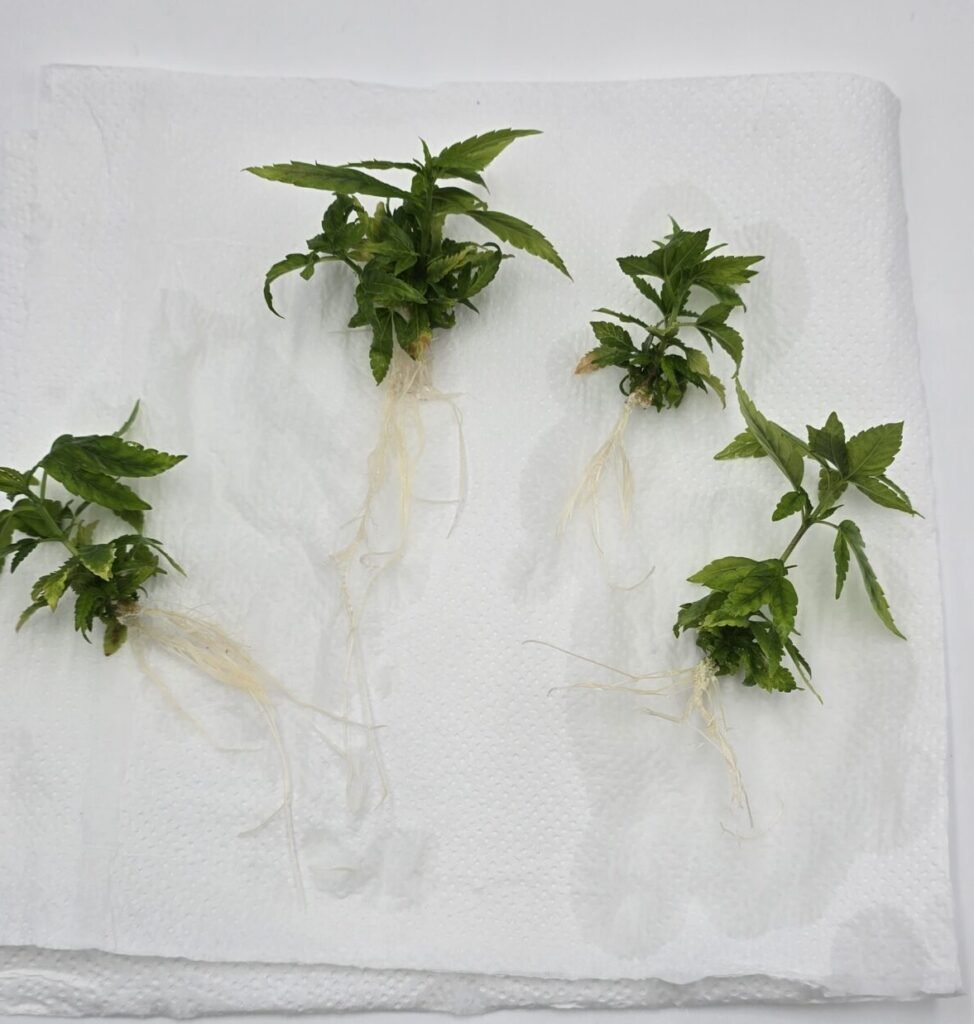
Cannabis is a member of the cannabis family and holds great historical significance in the Middle East and Asia due to its medicinal properties. This annual flowering herb is dioecious, with male and female reproductive organs located on separate plants, allowing for open pollination.
Cannabis has a wide range of uses and is utilized for fiber, oilseeds, food, recreational purposes, and medical applications. However, cannabis cultivation is subject to strict controls and regulations in many countries due to its psychoactive effects. Traditionally, cannabis is grown from seeds and cuttings. These methods are still primarily used in most cannabis facilities because of their simplicity.
However, they do not offer a viable solution for commercial growers. Cannabis plants are susceptible to a variety of fungal and viral diseases. Approximately 90% of California’s cannabis plants are infected with HpLVD (hop latent viroid), which affects product quality, production, and the supply chain. These challenges can be overcome through the use of tissue culture techniques.
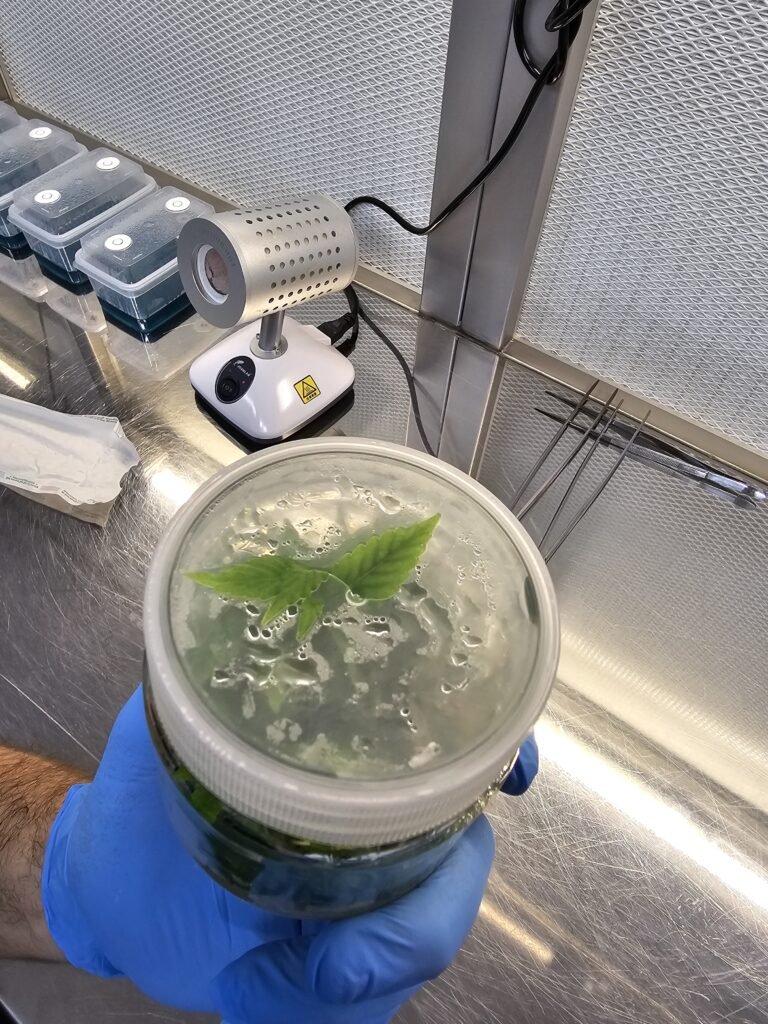
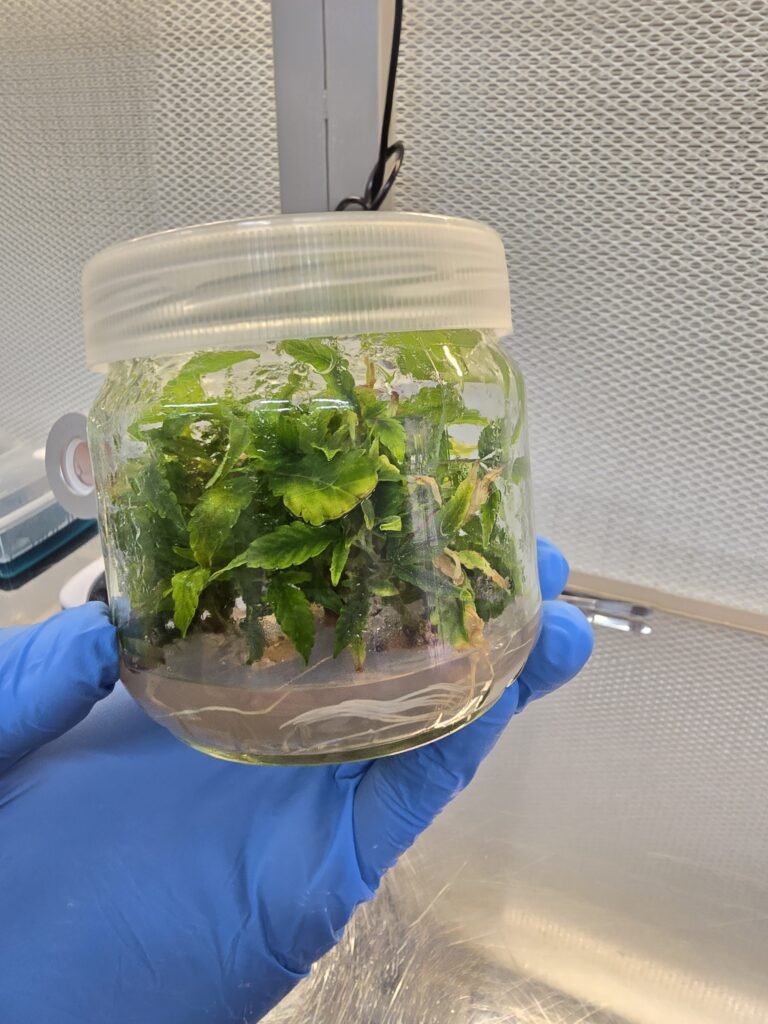
This technique is performed under completely sterile conditions, allowing growers to produce disease-free plants. It is important to remember that this technology also addresses the space constraints associated with traditional agricultural methods. Tissue culture does not require large areas to house the mother plant or plants at different stages of growth. You can stack vials of tissue-cultured plants on shelves to save a significant amount of space for other tasks.
This article provides a brief history and overview of cannabis tissue culture and delves into the chemical composition of the plant. History of Cannabis Tissue Culture The applications of cannabis have been overlooked for many years due to its use as a psychoactive drug.
In 1912, cannabis was severely restricted in several countries, including Canada and the United States. Early small-scale studies have shown that it can be used to treat various conditions, including autism spectrum disorders, anxiety, chronic pain, and seizures. However, restrictions on cannabis cultivation have slowed (and in some cases even halted) progress in cannabis research and commercialization. This has created several challenges when it comes to studying the medical, agronomic, horticultural, and biotechnological aspects of this plant.
However, in 2014, cannabis was legalized again in many parts of the world due to its medicinal and recreational benefits, subject to certain guidelines, regulations, and controls. It is a fast-growing plant that typically reaches 6 meters in height in its natural habitat. Plants vary in height depending on the environment in which they grow. For example, cannabis plants growing in temperate regions are relatively short compared to those in their natural habitat.
The first two leaves of a cannabis plant grow opposite each other as the plant begins to grow, but the arrangement of the leaves changes over time as the plant matures. The leaves are lobed and measure between 5 and 11 cm in length. Although the plant is dioecious, its sex is not known until the flowers bloom. Male cannabis plants are generally not used as medicinal plants due to their low cannabinoid content (secondary compounds used in the production of medicines).
Cannabis Tissue Culture Process Cannabis tissue culture is the clonal propagation of plants in a sterile, controlled environment. This technique is primarily used to extract secondary compounds from plants, mainly cannabinoids, and is employed in clinical laboratories to treat many diseases. Widely studied techniques for cannabis tissue culture include callus induction and Agrobacterium-mediated hemp transformation.

Cannabis tissue culture involves several steps that are essential for the successful propagation and cultivation of the plants.
These phases include:
- Introduction: The process begins by selecting a suitable explant—a piece of plant tissue, such as a shoot or the tip of a leaf—from a genetically desirable, disease-free parent plant. Sterilize the explant to remove contaminants and place it in a sterile medium.
- Proliferation: During this stage, the explant undergoes rapid cell division and proliferation. The explants are transferred to fresh medium containing growth regulators such as cytokinins and auxins, which promote shoot formation and proliferation. This results in the formation of multiple shoots or microshoots.
- Rooting: Once there are enough shoots, transfer them to a rooting medium containing auxin to stimulate root growth.
- Acclimatization: Once the seedlings are established, carefully acclimate them to the outdoor environment. This involves gradually exposing them to environmental conditions and adjusting humidity, temperature, and light levels to ensure a successful transition from in vitro to outdoor conditions. Acclimatized seedlings can then be transferred to a greenhouse or field for further growth and development.During these stages, strict aseptic techniques, proper nutrient formulation, and precise environmental control are essential for maintaining the health and vigor of tissue-cultured cannabis plants. These techniques enable the mass production of genetically identical seedlings that can be used for commercial cultivation, breeding programs, and research purposes.